Technological Innovations
Explore the latest technological innovations and research breakthroughs in thermochromic materials.
How to Choose Thermochromic Pigments: A Buyer's Checklist
Why Buying Thermochromic Pigments Is a Different Exercise
Standard colorants are selected by shade and fastness. Thermochromic systems add a trigger variable — temperature — and that single addition changes almost every question you should ask a supplier. Below is the checklist our technical team uses with buyers, in the order the decisions actually matter.
1. Fix the Reversal Temperature First
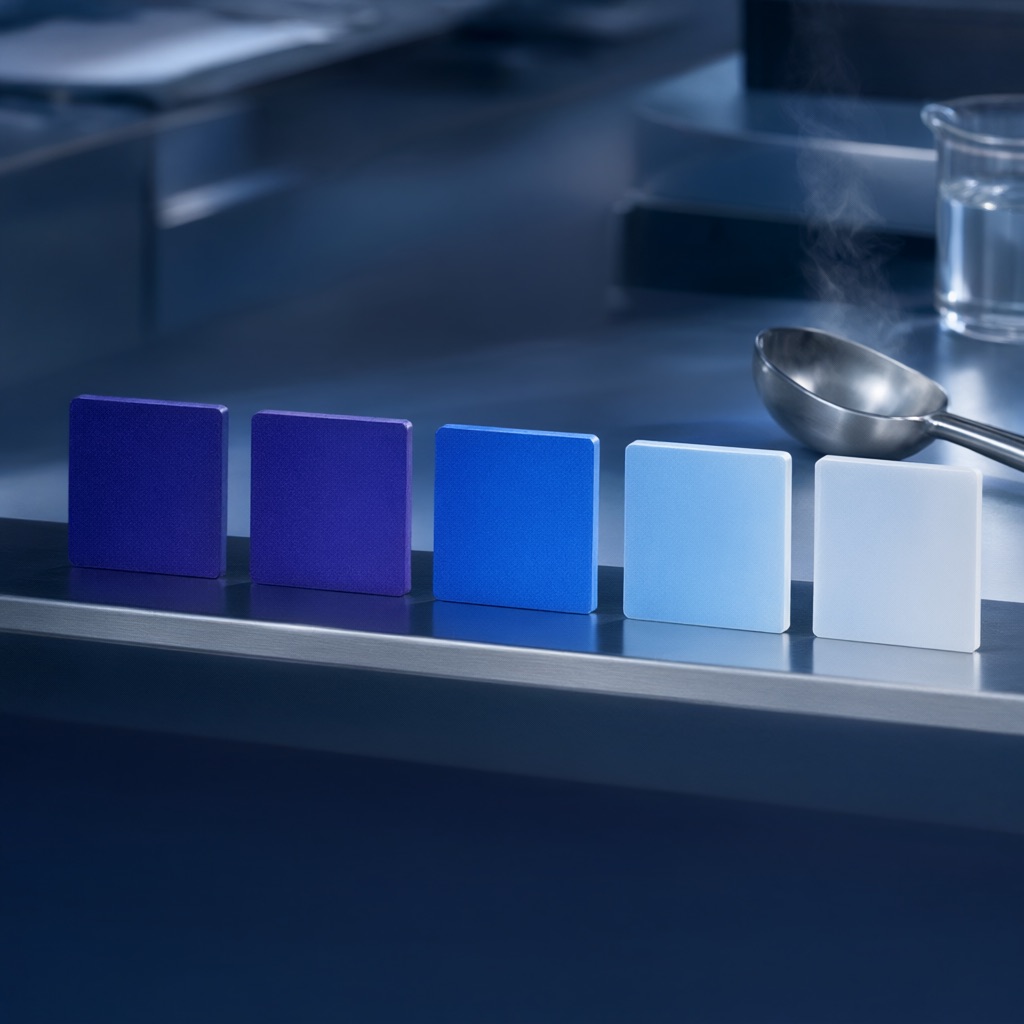
The reversal (activation) temperature is the point at which the color switches — below it the system is colored, above it the color clears (or flips to a second shade). Commercial series typically span −5 °C to 65 °C, and each step maps to a real-world use:
- −5 to 10 °C — cold-chain and refrigeration indicators
- 15 to 25 °C — ambient-shift labels, seasonal packaging, humidity-free "cold drink" cues
- 31 to 33 °C — body-temperature effects: cups, spoons, bath toys, wearable cues
- 43 to 65 °C — heat warnings for hot beverages, machinery surfaces and heated handles
State the tolerance you need, not just the nominal value — a ±2 °C band on paper can be visible to the eye in a narrow-range application.
2. Match the Carrier and the Process
Thermochromic color lives inside a microcapsule, and the capsule must survive your process. Practical rules:
- Keep substrate contact chemistry near pH 7–9; strong acids or bases attack the capsule wall.
- For plastics, carriers based on PP/PE with melt index ≥ 25 wet the capsules best; verify max processing temperature and residence time with the supplier before extrusion or molding.
- Typical powder dosing is 0.5–1.0% in plastics; masterbatch grades remove the dispersion risk entirely.
- Inks and coatings should use slurry or microcapsule dispersions sized for the print mesh — never grind thermochromic systems.
3. Judge Microcapsule Quality, Not Just Color
Two suppliers can show the same shade card and behave completely differently in production. Ask for:
- Particle size distribution (typically 1–10 µm) and its fit to your screen or film gauge
- Moisture content of the powder and packaging format (low-moisture bags matter for masterbatch plants)
- Post-cycling tint strength — color strength after, say, 100 thermal cycles is a better quality signal than first-cycle color
4. Understand Fatigue and Lightfastness Limits
Reversible systems cycle thousands of times, but two enemies shorten life: sustained heat and UV. The color effect is deliberately UV-sensitive, so outdoor articles need an overcoat or UV-filtering layer, and UV-stabilized grades should be selected explicitly. Always validate in the final matrix — the same grade can age differently in PP versus an acrylic clear coat.
5. Pick the Form Factor for Your Team's Capabilities
- Powder — maximum flexibility, requires good dispersion practice
- Masterbatch — carrier-matched, lowest risk for extrusion and molding plants
- Slurry / dispersion — for ink and coating formulators
- Color developers & composite systems — for ink makers building custom reversible systems
6. The Six-Point Buying Checklist
- Reversal temperature series and tolerance
- Effect type: colored→colorless, or color→color
- Carrier and process match (melt index, max temperature, pH window)
- Capsule specifications: particle size, moisture, packaging
- Compliance documents for your market (heavy metals, food contact where relevant)
- A written sample protocol: test in the final matrix, at final dosing, across the real temperature range
Where to Source Within the Aolong Group
Our own thermochromic pigment product line covers the full reversal-temperature spectrum, color developers and composite systems for inks and coatings. If your project is plastics-specific and you want carrier-matched, masterbatch-ready grades sorted by activation temperature and shade, browse the thermochromic pigments category on Aolong Chemical — each grade lists its reversal temperature, application window and packaging.
Bring us the trigger event, the substrate and the target activation temperature — a sample with the right chemistry will always beat a hundred shade cards.